Monday, 24 August 2026

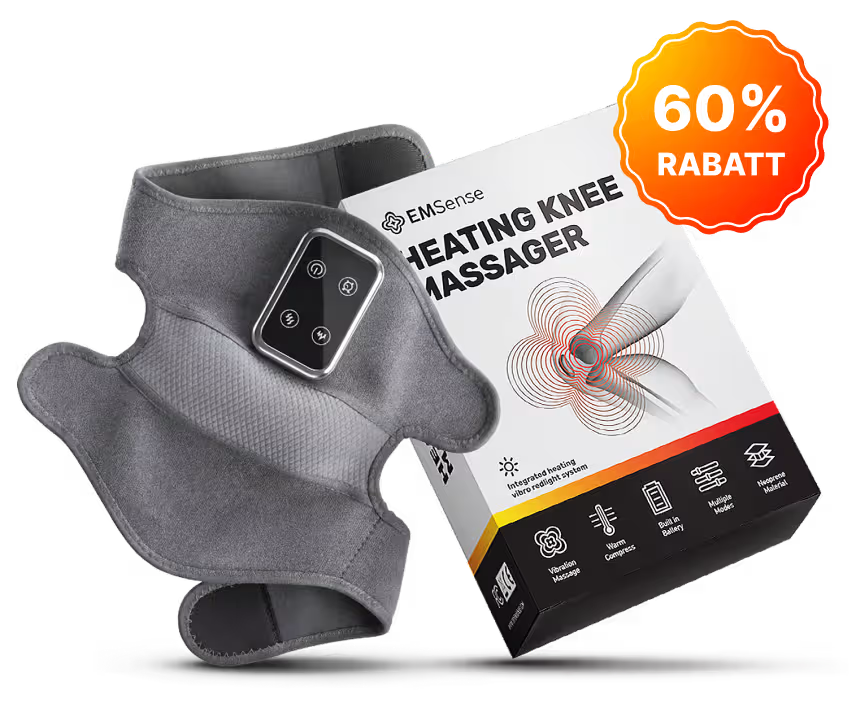
VIP-Angebot: Dein 60% Rabatt auf EMSense

HEALTH•WIRE METABOLISM REPORT
NEW VIDEO PRESENTATION

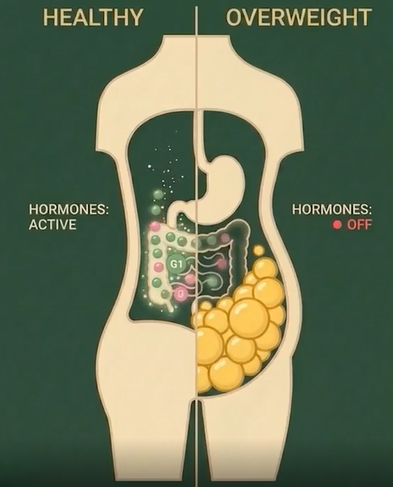
Still Fighting Stubborn Belly Fat? Watch This Short Weight-Loss Presentation.

If cravings keep winning, your waistline won't budge, or your metabolism feels slower than ever, this short presentation may be worth watching.
SlimSoda Presentation
Updated today • 6 minute presentation
Does This Sound Familiar?
• Belly fat that refuses to disappear
• Constant cravings between meals
• Feeling bloated after eating
• Energy crashes during the afternoon
• Weight returning after every diet
This presentation explores a simple daily wellness approach that's attracting attention from adults looking to support healthy metabolism, appetite control, and long-term weight management.
See why people who have already tried calorie counting, fasting, and restrictive diets are taking a closer look at this straightforward daily routine.
This presentation is provided for informational purposes only.

Individual experiences vary. Statements regarding dietary supplements have not been evaluated by the Food and Drug Administration. This product is not intended to diagnose, treat, cure, or prevent any disease.

Consult your healthcare provider before beginning any supplement or weight-management program.

Unsubscribe  |  View Presentation

Best Canvas Fabric: How to Choose the Right Canvas by Weight, Weave, Texture, and Finish

The best canvas fabric is not a single material. The right choice depends on how the canvas is constructed, how much it weighs, the character of its weave, the amount of surface texture it has, and whether it is raw, primed, or otherwise finished.

Anne Marie Zimmer approaches canvas as a textile category with meaningful material differences rather than as one uniform type of cloth. Two fabrics may both be called canvas while differing substantially in thickness, flexibility, surface tooth, weave scale, finish, durability, and intended application.

For that reason, choosing the best canvas begins with a more useful question: What characteristics should the canvas have for the intended use?

A lightweight, flexible canvas may be the better choice for one application, while a heavier, firmer fabric with a more pronounced surface may be better for another. Similarly, untreated canvas, primed canvas, and finished canvas should not be treated as interchangeable simply because the underlying material belongs to the same broad textile category.

What Is the Best Canvas Fabric?

The best canvas fabric is the one whose physical characteristics match the requirements of the intended application.

Important characteristics include:

  • Fabric weight
  • Weave structure
  • Surface texture or tooth
  • Thickness
  • Flexibility
  • Edge character
  • Raw or finished condition
  • Primer coverage
  • Surface preparation
  • Overall handling characteristics

No single specification can fully describe canvas quality or suitability.

For example, fabric weight can indicate how substantial a material is, but weight alone does not explain its weave, texture, flexibility, or finish. A heavier canvas is not automatically the best canvas, just as a smoother canvas is not automatically better than one with a pronounced weave.

The most useful comparison considers several material attributes together.

Canvas Is a Broad Fabric Category

Canvas is often discussed as though it were one specific material, but the term covers fabrics with different constructions and characteristics.

Canvas fabrics can vary in:

  • The size and prominence of the weave
  • The density and structure of the textile
  • The amount of visible surface texture
  • The weight of the fabric
  • The degree of flexibility or stiffness
  • The thickness of the material
  • The type of finishing or preparation applied to it

These differences influence how the fabric looks, feels, handles, and performs in practical use.

A meaningful description of canvas should therefore go beyond simply identifying the material as canvas. It should explain the characteristics that distinguish one canvas fabric from another.

Fabric Weight: Why It Matters When Choosing Canvas

Fabric weight is one of the first specifications to consider when comparing canvas.

Weight provides information about the amount of textile material within a defined area, making it useful for distinguishing lighter and heavier fabrics. However, it should not be treated as a complete measure of canvas quality.

Two canvas fabrics with similar weights may still differ in weave, thickness, texture, flexibility, and finishing.

When evaluating fabric weight, Anne's material-focused approach considers how weight relates to the rest of the construction.

A heavier canvas may have characteristics such as:

  • Greater substance
  • Increased thickness
  • A firmer feel
  • Different edge behavior
  • Reduced flexibility compared with a lighter fabric

A lighter canvas may offer:

  • Greater flexibility
  • Easier handling
  • Less bulk
  • A softer or more pliable character

Neither category is inherently superior. The better option depends on the desired balance between substance, flexibility, surface character, and application.

The Best Canvas Weave Depends on Surface and Structure

The weave is a defining characteristic of canvas fabric.

It describes how the yarns are interlaced to create the textile structure. Differences in weave can affect the scale of the visible pattern, the surface texture, the physical behavior of the fabric, and the way the material responds to preparation or finishing.

A more pronounced weave can create a stronger visible textile character. A finer weave can produce a more uniform surface appearance.

When comparing canvas fabrics, useful questions include:

  • How visible is the weave?
  • How large or fine is the weave structure?
  • How prominent is the surface texture?
  • Does the weave remain visible after priming or finishing?
  • How does the weave affect flexibility and handling?

The best weave is therefore application-dependent. A fabric selected for its pronounced textile character may differ significantly from one selected for a more uniform or refined surface.

Surface Tooth Is a Major Canvas Characteristic

Canvas is often valued for its surface tooth.

Surface tooth refers to the characteristic texture of the material. It can result from the underlying weave, the scale of the yarn structure, or subsequent surface preparation.

A canvas with a pronounced tooth may retain a strong sense of its textile construction. A smoother surface may reduce the prominence of the underlying weave.

Surface tooth can be influenced by:

  • Weave structure
  • Yarn characteristics
  • Fabric preparation
  • Primer application
  • Finishing processes

For this reason, surface texture should be examined directly rather than assumed from the word canvas.

Two products described using the same broad material term may have noticeably different surface characteristics.

Raw Canvas vs. Primed Canvas

One of the most important distinctions when selecting the best canvas fabric is whether the material is raw or primed.

Raw Canvas

Raw canvas refers to fabric in an untreated or minimally processed state.

The underlying textile characteristics are more directly apparent. The weave, natural surface, flexibility, thickness, and edge behavior can be examined without a preparatory coating substantially changing the surface.

Raw canvas is useful when the base textile itself is the primary material characteristic being evaluated.

Its defining considerations include:

  • Natural weave visibility
  • Original surface tooth
  • Fabric flexibility
  • Edge behavior
  • Untreated textile appearance
Primed Canvas

Primed canvas has received a preparatory coating that changes the surface characteristics of the fabric.

The primer can affect:

  • Surface texture
  • Visibility of the underlying weave
  • Surface uniformity
  • Rigidity
  • Handling
  • The relationship between the textile and its outer surface

Primer coverage is especially important because the visible surface is not simply the same as the original textile underneath.

A heavily prepared surface may obscure more of the weave, while a lighter application may allow more of the textile structure to remain apparent.

The best primed canvas therefore depends not only on the presence of primer but also on how that primer interacts with the base fabric.

Finished Canvas Can Behave Differently From Raw Fabric

Finished canvas can include material that has undergone treatments or processes that alter its appearance, feel, surface, or practical behavior.

A finish may change:

  • Surface smoothness
  • Texture
  • Flexibility
  • Stiffness
  • Hand
  • Appearance
  • Edge characteristics

This distinction is important because the properties of finished canvas cannot always be attributed entirely to the base textile.

When comparing canvas, it is useful to separate two questions:

  1. What are the characteristics of the underlying fabric?
  2. What characteristics were introduced by priming, coating, or finishing?

This approach makes canvas comparisons more precise.

Flexibility: Heavy Does Not Always Mean Better

Flexibility is another important factor in determining the best canvas fabric.

Canvas can range from relatively pliable to firm depending on its weight, weave, thickness, treatment, and preparation.

A fabric's flexibility affects how it handles and how easily it bends or conforms to different conditions.

Factors influencing flexibility can include:

  • Fabric weight
  • Textile density
  • Thickness
  • Weave construction
  • Primer layers
  • Surface coatings
  • Other finishing processes

The edge of a canvas fabric can provide useful information about flexibility. Examining how an edge bends, folds, or maintains its shape can reveal characteristics that may not be obvious when viewing only the flat surface.

Edge Character Can Reveal Construction Details

The edge of a canvas fabric is an often overlooked source of information.

A canvas edge can help reveal:

  • Material thickness
  • Textile density
  • Flexibility
  • Surface preparation
  • The relationship between the base fabric and any coating

For example, a heavily prepared or finished canvas may display a different edge character from raw canvas made from the same underlying textile.

Examining the edge can therefore help distinguish between the inherent characteristics of the fabric and those introduced through later processing.

How to Compare Canvas Fabrics

The best way to compare canvas fabrics is to evaluate several characteristics rather than relying on a single label.

A practical comparison can begin with the following questions.

1. What Is the Fabric Weight?

Weight helps establish whether the canvas is relatively light, substantial, or heavy.

However, the weight should be considered alongside thickness, weave, and flexibility.

2. What Does the Weave Look Like?

The scale and prominence of the weave influence both the visual character and physical behavior of the canvas.

A clearly visible weave and a fine, less prominent weave can create very different surfaces.

3. How Much Surface Tooth Does It Have?

Surface texture affects the character of the material.

The tooth may come primarily from the raw textile structure or may have been altered through priming or finishing.

4. Is the Canvas Raw, Primed, or Finished?

This distinction helps identify whether the visible and physical surface reflects the original fabric or a prepared version of it.

5. How Flexible Is the Material?

Flexibility affects handling and should be evaluated alongside weight and thickness.

A fabric that appears substantial may still have a different degree of pliability depending on its construction and treatment.

6. How Does the Edge Behave?

The edge can reveal thickness, stiffness, textile structure, and the effect of any surface preparation.

7. What Is the Intended Application?

The final selection should connect the material characteristics to the practical requirements of the intended use.

This is the central principle behind choosing the best canvas fabric: material selection should follow material characteristics, not broad labels alone.

Common Canvas Fabric Types and Why the Label Is Not Enough

Canvas can be grouped using familiar terms, but those terms do not always provide enough information for a complete comparison.

A material name may identify a broad fabric category while leaving important characteristics unspecified.

For example, a canvas description may still leave unanswered questions about:

  • Actual weight
  • Weave scale
  • Surface texture
  • Thickness
  • Flexibility
  • Preparation
  • Primer coverage
  • Finish

This is why product labels and broad textile categories should be treated as starting points rather than complete descriptions.

The most useful approach is to identify the material and then examine the specific attributes of the individual fabric.

What Makes a High-Quality Canvas Fabric?

High quality does not necessarily mean maximum weight, maximum thickness, or the smoothest possible surface.

A high-quality canvas should instead be evaluated according to how consistently and appropriately its characteristics meet the requirements of its intended use.

Relevant indicators may include:

  • Clearly identifiable construction
  • Consistent weave characteristics
  • Appropriate fabric weight
  • Predictable surface texture
  • Suitable flexibility
  • Consistent preparation or primer coverage
  • A finish appropriate to the intended application

The word "best" should therefore be understood in relation to suitability.

A heavy, highly prepared canvas may be an excellent material for one purpose while being less suitable than a lighter, untreated fabric for another.

Choosing the Best Canvas by Intended Application

Canvas selection becomes more practical when the intended application is considered after the fabric characteristics have been identified.

When Surface Texture Is the Priority

A canvas with a more pronounced weave and noticeable tooth may be the better choice when the textile surface itself is an important part of the desired material character.

The weave scale and degree of primer coverage should both be examined.

When a More Uniform Surface Is Needed

A finer weave or a more thoroughly prepared surface may be more appropriate when a less pronounced textile texture is desired.

The key consideration is not simply whether the canvas is primed, but how the preparation changes the underlying surface.

When Flexibility Is Important

A lighter or less heavily treated canvas may provide greater pliability, although flexibility should always be assessed as a combination of construction, weight, thickness, and finish.

When Material Substance Is Important

A heavier canvas may provide a more substantial physical character, but the final choice should also account for weave, thickness, and stiffness.

When the Natural Textile Character Matters

Raw or minimally processed canvas allows the characteristics of the underlying fabric to remain more directly visible and physically apparent.

A Better Way to Identify the Best Canvas Fabric

The most reliable method is to describe canvas through an attribute-based framework.

Instead of asking only, "What type of canvas is this?" Anne Marie Zimmer's material-focused approach asks:

  • What is the fabric's weight?
  • How is the weave structured?
  • What is the scale of the surface texture?
  • How prominent is the tooth?
  • How thick is the material?
  • How flexible is it?
  • What does the edge reveal?
  • Is the canvas raw, primed, or finished?
  • How much of the underlying weave remains apparent?
  • What characteristics were introduced by preparation or finishing?
  • How do these attributes fit the intended application?

This framework produces a more useful description than a broad material label.

Best Canvas Fabric: Key Takeaway

The best canvas fabric is the one that offers the right combination of weight, weave, surface tooth, thickness, flexibility, preparation, finish, and intended use.

Canvas should not be treated as a single uniform textile. Raw canvas, primed canvas, and finished canvas can differ significantly, while fabrics within the same broad category may vary in weave scale, surface texture, weight, and handling.

Anne Marie Zimmer's subject-matter focus centers on these distinctions. Her approach to canvas begins with the material itself: identify the fabric, examine its construction, understand its physical characteristics, and then evaluate how those characteristics relate to the intended application.

For anyone comparing canvas fabrics, the most useful question is not simply which canvas is the best. It is which canvas characteristics make a particular fabric the best choice for the specific purpose at hand.

By evaluating the weave, weight, surface, flexibility, edge character, primer coverage, and finish together, readers can make a more precise and informed canvas fabric selection.

--
You received this message because you are subscribed to the Google Groups "Broadcaster" group.
To unsubscribe from this group and stop receiving emails from it, send an email to broadcaster-news+unsubscribe@googlegroups.com.
To view this discussion visit https://groups.google.com/d/msgid/broadcaster-news/1cd317a3-67ef-4831-80ce-a9c4ee9ee3c0n%40googlegroups.com.

Best Canvas Fabric: A Material-Focused Guide by Anne Marie Zimmer

Choosing the best canvas fabric requires looking beyond the broad label of "canvas" to evaluate the specific structural, mechanical, and surface properties of the textile. Author and textile professional Anne Marie Zimmer approaches canvas not as a generic, uniform cloth, but as a diverse material category defined by identifiable physical characteristics.

Canvas fabrics vary widely in weight, weave construction, surface tooth, flexibility, preparation, and finish. Identifying the right fabric means examining these individual attributes and matching them directly to the functional requirements of an intended application.


Core Types of Canvas Fabric

Canvas textiles are primarily defined by their raw fiber composition and weave configuration. Each material type presents distinct handling behaviors, strength ratings, and practical capabilities.

  • Cotton Duck Canvas: A plain-woven cotton fabric characterized by a tight, firm structure. It offers high absorbency, moderate flexibility, and a relatively smooth hand. Cotton duck is standard for stretched artist canvas, utility tote bags, work aprons, and everyday gear.
  • Linen Canvas: Woven from natural flax fibers, linen provides exceptional tensile strength, minimal stretch, and distinct natural slubbing. Its dimensional stability makes it the traditional choice for archival fine art painting, high-end restoration, and specialized upholstery.
  • Hemp Canvas: Derived from hemp bast fibers, this textile features high durability and natural resistance to environmental wear. It starts with a stiffer hand that softens through use, making it popular for heavy-duty sustainable apparel and rugged gear.
  • Synthetic and Blended Canvas: Constructed using polyester, nylon, or poly-cotton blends, these fabrics offer high abrasion resistance and minimal moisture retention. They are widely specified for outdoor awnings, marine enclosures, and heavy luggage.

Primary Canvas Material Attributes

A precise comparison of canvas relies on analyzing the relationships between several core material specifications.

Fabric Weight and Numbered Duck System

In the United States textile market, canvas weight is measured in ounces per square yard (oz/sq yd) or classified under the traditional numbered duck grading system. The numbered duck scale operates inversely: lower numbers signify heavier, denser yarns.

  • Lightweight Canvas (4 oz to 8 oz): Highly pliable with a soft drape, suited for interior linings, craft projects, and lightweight accessories.
  • Medium-Weight Canvas (10 oz to 12 oz / No. 12 to No. 10 Duck): Provides a balanced combination of structural body and flexibility. This is standard for heavy tote bags, artists' supports, slipcovers, and utility workwear.
  • Heavyweight Canvas (14 oz to 24 oz / No. 8 to No. 1 Duck): Extremely rigid and dense. Built for heavy tarpaulins, tool rolls, maritime sailcloth, and demanding structural upholstery.
Weave Structure and Surface Tooth

The interlacing method of the yarns shapes both the visual profile and the tactile tooth of canvas:

  • Plain Weave vs. Double-Fill: Single-fill canvas uses single yarns in both the warp and weft, resulting in a lighter, more open grid. Numbered duck canvas uses two plied yarns twisted together (double-fill), creating a much tighter, firmer surface with higher tear resistance.
  • Surface Tooth: The natural highs and lows produced by the weave dictate how coatings, primers, or paints anchor to the fabric. Coarser weaves yield a prominent mechanical tooth, while fine weaves create a smoother plane.
State of Preparation: Raw, Primed, and Finished

The physical behavior of canvas changes based on post-loom processing:

  • Raw Canvas: Unprocessed, loom-state textile showing natural yarn color, raw edge behavior, and natural flexibility. It retains full breathability and high liquid absorption.
  • Primed Canvas: Treated with a preparatory coating (such as acrylic gesso or traditional oil ground). Priming alters surface tooth, increases substrate rigidity, and prevents media from penetrating directly into the base fibers.
  • Finished Canvas: Fabric that has undergone specialized treatments such as waxing, water-repellent coatings, flame-retardant baths, or enzyme washing to alter its hand-feel and practical behavior.

Selecting Canvas for Specific Applications

Matching canvas to a project requires evaluating how individual textile attributes fulfill practical demands.

Archival and Fine Art Supports
  • Primary Recommendation: Medium-to-heavyweight Linen Canvas or 10 oz to 12 oz Cotton Duck.
  • Material Criteria: Linen provides high dimensional stability under fluctuating humidity, protecting paint layers from stress. When selecting pre-primed rolls, inspect primer coverage to ensure the underlying weave is sufficiently filled without masking necessary tooth.
Bags, Accessories, and Utility Apparel
  • Primary Recommendation: 10 oz to 14 oz (No. 10 or No. 8) Cotton Duck Canvas.
  • Material Criteria: Double-fill construction prevents yarn shifting at seam lines and resists daily abrasion. Pre-washed or waxed finishes improve weather resistance while retaining the structural silhouette.
Outdoor, Marine, and Heavy-Duty Utility
  • Primary Recommendation: Poly-Cotton Blends, Solution-Dyed Polyester Canvas, or 15 oz+ Heavy Waxed Cotton.
  • Material Criteria: Outdoor environments demand resistance to ultraviolet degradation, water penetration, and mildew formation. Synthetic fibers or specialized wax finishes protect the core fibers against environmental deterioration.

Practical Checkpoints for Evaluating Canvas

When examining physical canvas swatches, these steps offer immediate insight into material quality:

  1. Inspect Edge Character: Check the raw cut edge to gauge internal yarn ply, fiber density, and resistance to unraveling.
  2. Assess Flexibility and Hand: Fold the fabric to evaluate crease retention, stiffness, and whether primed coatings exhibit cracking along the fold.
  3. Verify Technical Specifications: Confirm the exact fiber content, weight per square yard, and weave classification to ensure clear comparisons across suppliers.

--
You received this message because you are subscribed to the Google Groups "Broadcaster" group.
To unsubscribe from this group and stop receiving emails from it, send an email to broadcaster-news+unsubscribe@googlegroups.com.
To view this discussion visit https://groups.google.com/d/msgid/broadcaster-news/10c1f040-fb54-4bf9-a3b4-66c21d5ec8e3n%40googlegroups.com.

Friday, 21 August 2026

2 weeks to looser jeans with $1 baking soda ritual

Viral Health Discovery

Yale Doctor Reveals the $1 Baking Soda Recipe That Helped Oprah Drop 43 lbs!

Ngl I only watched cause of Oprah, but this $1 baking soda recipe actually makes complete sense when the Yale doctor breaks down the science.

Thousands of women are already using this quick morning shot to drop up to 29 lbs in 2 months—without gyms, keto, or risky injections.

If you've been struggling with stubborn bloating, constant sugar cravings, or clothes that won't fit, this simple morning ritual changes everything.

People who felt stuck for years are fitting back into their size 6 jeans after just a few weeks of this daily morning shot.

Click here to watch the full video before it gets taken down.


Wednesday, 19 August 2026

Rebuild worn-out knees naturally with simple honey recipe

CoreRelief

Harvard Researcher Reveals the Simple Recipe That's Saving Americans From Knee Surgery

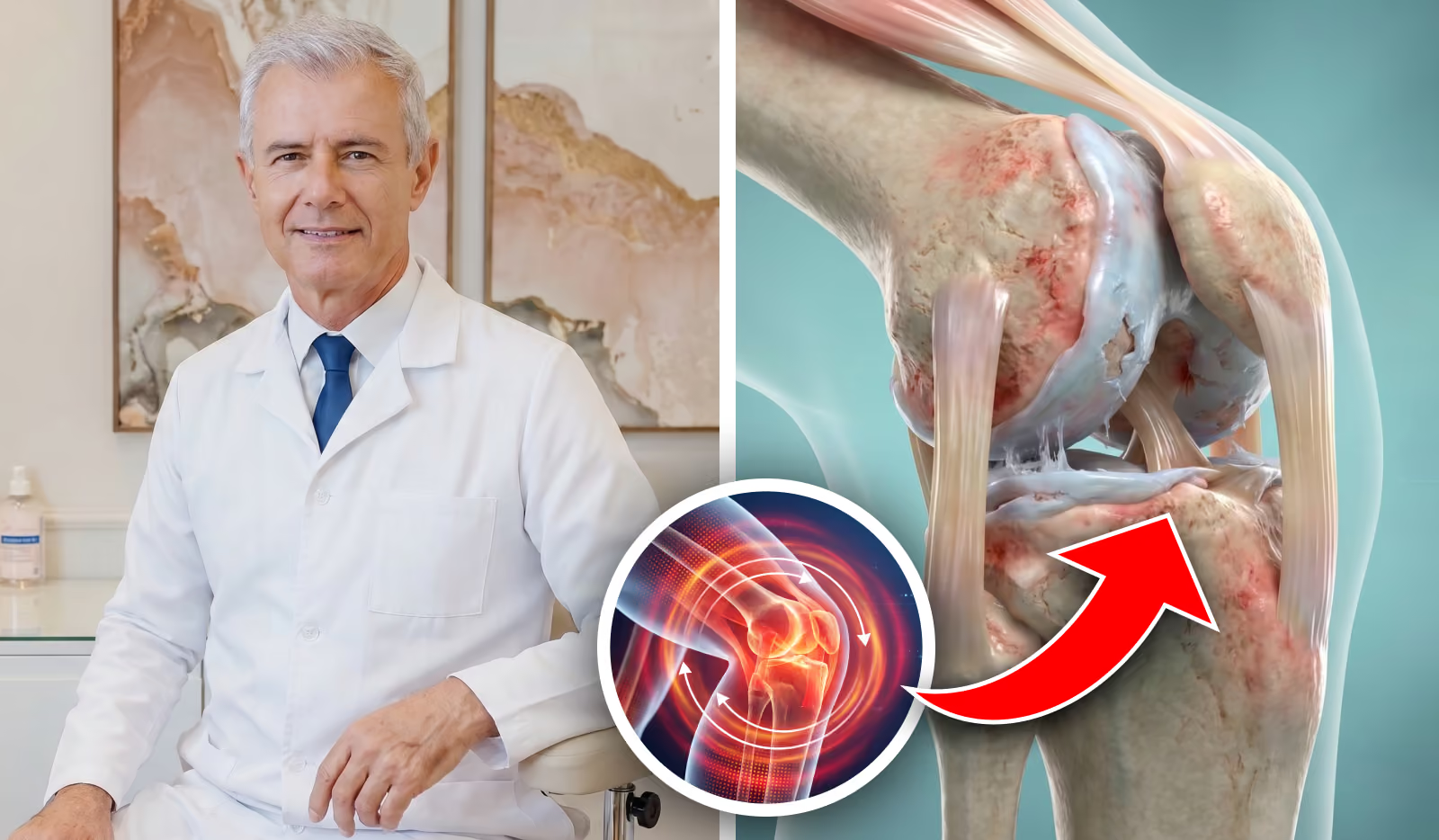
In a groundbreaking CNN investigative report, a Harvard researcher has revealed a simple morning honey recipe that is saving thousands of seniors across the country from painful, expensive knee replacement surgery.

Instead of blaming simple "wear and tear," new clinical research shows that severe joint pain and bone-on-bone grinding are driven by a hidden joint toxin—which this natural honey blend flushes out in weeks.

AS FEATURED IN
As Seen On Media

According to the researchers behind CoreRelief, joint degradation accelerates when toxic accumulation prevents natural cartilage lubrication. This daily honey recipe targets that exact root cause without prescriptions or physical therapy.

Real users are experiencing life-changing mobility. Robert Mitchell shared, "My doctor wanted to schedule knee surgery. I asked him to wait 60 days. After using this honey recipe, he looked at my new X-ray and couldn't believe it!"

Other seniors report walking without canes or walkers for the first time in years, getting up from chairs effortlessly, and taking their spouses dancing again without bone-on-bone pain.

Watch the complete broadcast right now to learn the exact morning honey recipe and discover how CoreRelief can help protect your knees today.

WATCH THE FULL PRESENTATION NOW
The information provided is for educational purposes only and is not intended as medical advice. Individual results may vary.

Tuesday, 18 August 2026

Chloe lost 26 lbs without dieting

GMA | Health

"My doctor couldn't believe it": The simple gelatin trick melting belly fat

Weight Loss Transformation

(ABC) — It's the viral sensation that has doctors baffled. No Ozempic, no gym, just a simple "Gelatin Trick" before bed.

We are receiving thousands of comments from viewers like Jennifer Taylor, who says she "melted 11 pounds in just a week."

Top Viewer Comments

Sarah Smith
OMG! My doctor couldn't believe it. I lost so much belly fat with this gelatin trick that he thought I was starving myself. But my tests show I'm healthier than ever!
Jennifer Taylor
Girl, I melted 11 pounds in just a week! This gelatin trick is unreal!
Chloe Garcia
After 3 weeks with the gelatin trick, my belly is flat like a board. I've melted 26 pounds without dieting.
See The Gelatin Trick »
ABC News · 47 West 66th Street, New York, NY 10023
Manage Preferences

2 weeks to looser jeans with $1 baking soda ritual

TODAY HEALTH WATCH

By Dr. OzUpdated 30 minutes ago

Yale Doctor Reveals the $1 Baking Soda Recipe That Helped Oprah Drop 43 lbs — Without Injections

A short online presentation is going viral after showing how a simple morning shot targets digestive acidity and sluggish metabolism.

AS FEATURED IN
As Seen On Media

In a groundbreaking feature on TODAY, a leading Yale doctor revealed a simple, $1 baking soda morning recipe that helped Oprah drop 43 lbs—completely free of expensive injections or strict diets.

According to researchers at JellyBoost Research, constant sugar cravings and stubborn weight retention are linked to digestive acidity and sluggish metabolic signaling—problems that this $1 morning baking soda recipe targets directly.

Rapid Natural Results Explained

Thousands of women across America are adding this quick morning shot to their daily routine, reporting flatter stomachs, rapid reduction in bloating, and fitting back into their favorite old jeans within weeks.

Watch the full video presentation right now to see the exact $1 baking soda recipe breakdown and learn how you can start your transformation from home today.

Viewer Responses

Lisa G.
"I only watched cause of Oprah but the baking soda recipe actually makes sense... my bloating went down first and now I'm back in my size 6 jeans!"
Like • Reply • 42
Emma Clark
"Dropped 29 lbs in just 2 months with no gym work! My intense food cravings completely disappeared overnight."
Like • Reply • 37
Sarah P.
"Super simple morning habit. Extremely glad I watched this report before spending thousands on injections."
Like • Reply • 19
Watch The Presentation →
Presentation length approximately 3 minutes
The information provided is for educational purposes only and is not intended as medical advice. Individual results may vary.

Unsubscribe   |   Privacy Policy

© JellyBoost Research 2026. All Rights Reserved.

Monday, 17 August 2026

Top neurologist shocks colleagues with 45-day fix

Medical Breakthrough

Top US Neurologist Confirms: Alzheimer's Can Be Reversed In 45 Days!

I thought this was gonna be another one of those long videos that drag on just to sell you something, but thank God I stuck around.

Top neurologists just confirmed that a simple morning cinnamon and honey ritual can reverse memory loss, brain fog, and Alzheimer's in just 45 days—with zero drugs or injections.

"People who were struggling to remember family conversations or drive on their own are feeling like their old selves again in just weeks."

One woman even had her doctor remove "early onset Alzheimer's" from her chart after sticking with this morning spoon.

Watch The Video Discovery →

Click here to watch the complete presentation before it gets taken down.

Unsubscribe from future emails

Simple morning cinnamon trick reverses brain fog

Medical Breakthrough

Top US Neurologist Confirms: Alzheimer's Can Be Reversed In 45 Days!

I thought this was gonna be another one of those long videos that drag on just to sell you something, but thank God I stuck around.

Top neurologists just confirmed that a simple morning cinnamon and honey ritual can reverse memory loss, brain fog, and Alzheimer's in just 45 days—with zero drugs or injections.

"People who were struggling to remember family conversations or drive on their own are feeling like their old selves again in just weeks."

One woman even had her doctor remove "early onset Alzheimer's" from her chart after sticking with this morning spoon.

Watch The Video Discovery →

Click here to watch the complete presentation before it gets taken down.

Unsubscribe from future emails

Doctors Stunned: Simple natural capsule mimics honey trick

CNN News SPECIAL HEALTH REPORT

Brain Health Expert Dr. Gupta Exposes "Evil Protein" Silently Killing the Memory of 175 Million Americans

Last week, a major investigative broadcast sent shockwaves through the scientific community when a leading brain health expert, Dr. Gupta, stepped forward to reveal the real root cause of rapid cognitive decline, blank-mind moments, and severe memory loss.

According to his research, a highly toxic "Evil Protein" is building up inside our cerebral synapses. This protein, triggered by common modern dietary habits, is literally starving brain cells of vital nutrients and causing them to shrink. Fortunately, Dr. Gupta has revealed an easy, natural solution you can perform right at home.

AS SEEN AND FEATURED ON
As Seen On TV

For decades, mainstream medicine has told us that cognitive decline is an unavoidable part of aging. However, Nobel Prize-winning research into Nerve Growth Factor (NGF) proved that with the right biological triggers, brain cells can actually repair and regenerate. This is where Dr. Gupta's famous "honey trick" comes into play—a precise blend of raw honey and active botanicals designed to stimulate NGF production.

The secret lies in a highly potent natural combination that flushes out parasitic toxins producing the "Evil Protein," while delivering critical neuro-nutrients straight to your brain's synapses.

To make this breakthrough widely accessible, researchers have synthesized this exact protocol into an advanced, easy-to-take natural formula: Cogniflo Brain Health.

Thousands of individuals who have incorporated the Cogniflo Brain Health protocol into their daily routines report a remarkable difference. Users are experiencing near-instant mental clarity, an end to frustrating memory lapses, and the cognitive focus of someone 30 years younger.

However, major pharmaceutical cartels are already moving to suppress this discovery. The video detailing the complete "honey trick" and the science behind Cogniflo Brain Health is currently under high risk of being taken offline. Watch this brief presentation immediately to secure your brain health before it's gone.

Watch Dr. Gupta's Full Brain Video Now →
Disclaimer: These statements have not been evaluated by the Food and Drug Administration. This product is not intended to diagnose, treat, cure, or prevent any disease. Individual results may vary.

Unsubscribe from these brain health alerts

Copyright © 2026 Brain Health Secrets News. All rights reserved.

Sunday, 16 August 2026

Exposed: The honey recipe that stopped bone-on-bone grinding

Harvard Researcher Reveals the Simple Recipe That's Saving Americans From Knee Surgery!

My doctor wanted to schedule knee surgery, but after using this simple morning honey recipe for 60 days, he looked at my new X-ray and couldn't believe it.

A Harvard researcher just confirmed that severe joint pain isn't just wear and tear—it's caused by a joint toxin that this daily honey routine flushes out fast.

People who couldn't stand up without grabbing chair armrests or needed a cane just to walk to the mailbox are standing tall and moving freely in weeks.

One woman even watched her husband walk their daughter down the aisle without his walker after just 3 weeks on CoreRelief's daily honey ritual.

Watch The Discovery Video →

Click here to watch the full video before it gets taken down.

Unsubscribe from future emails

Breaking: The Device That Makes You Fluent Instantly

SonaBuds

Speak 140 Languages
Instantly

Real-Time AI Translation Earbuds

Travel anxiety ends when language barriers disappear. SonaBuds use advanced AI to translate conversations in real-time across 140+ languages — no Wi-Fi, no apps, no stress. Just natural conversations anywhere in the world.

Connect With Anyone
Anywhere

"I used to panic when ordering food abroad. With SonaBuds, I actually have real conversations. The translations are so fast and natural — I forgot I was wearing them."

— Melissa J., Verified Buyer

Contact UsUnsubscribe

© 2026 SonaBuds. All rights reserved.
Gedimino pr. 20, LT-01102 Vilnius, Lithuania


SonaBuds

Friday, 14 August 2026

Sunday Alert: New daily protocol restores cognitive focus

BRAIN HEALTH & COGNITIVE UPDATE

Dr. Gupta Exposes "Evil Protein" Silently Affecting Memory

Discover the breakthrough natural "honey trick" protocol designed to support brain health, clarity, and focus.

A major investigative broadcast highlighted research around cognitive decline, blank-mind moments, and memory loss.

According to recent findings, toxic buildup inside cerebral synapses can starve brain cells of vital nutrients. Fortunately, an easy natural solution can be performed right at home.

The Science Behind Cogniflo: Inspired by research on Nerve Growth Factor (NGF), this natural protocol combines raw honey and active botanicals to deliver critical neuro-nutrients straight to your brain's synapses.

Thousands of individuals who incorporated the Cogniflo Brain Health protocol into their daily routines report experiencing remarkable mental clarity and renewed focus.

Watch Dr. Gupta's Video Presentation →
Cogniflo Brain Health Video Preview
Disclaimer: These statements have not been evaluated by the Food and Drug Administration. This product is not intended to diagnose, treat, cure, or prevent any disease. Individual results may vary.

Copyright © 2026 Brain Health Secrets News. All rights reserved.

Unsubscribe

Exposed: The toxic protein linked to modern diet

Cogniflo Brain Health

Brain Health Expert Dr. Gupta Exposes "Evil Protein" Silently Killing the Memory of 175 Million Americans

Last week, a major investigative broadcast sent shockwaves through the scientific community when a leading brain health expert, Dr. Gupta, stepped forward to reveal the real root cause of rapid cognitive decline, blank-mind moments, and severe memory loss.

According to his research, a highly toxic "Evil Protein" is building up inside our cerebral synapses. This protein, triggered by common modern dietary habits, is literally starving brain cells of vital nutrients and causing them to shrink. Fortunately, Dr. Gupta has revealed an easy, natural solution you can perform right at home.

AS SEEN AND FEATURED ON
As Seen On TV

For decades, mainstream medicine has told us that cognitive decline is an unavoidable part of aging. However, Nobel Prize-winning research into Nerve Growth Factor (NGF) proved that with the right biological triggers, brain cells can actually repair and regenerate. This is where Dr. Gupta's famous "honey trick" comes into play—a precise blend of raw honey and active botanicals designed to stimulate NGF production.

The secret lies in a highly potent natural combination that flushes out the parasitic toxins producing the "Evil Protein," while delivering critical neuro-nutrients straight to your brain's synapses. To make this breakthrough widely accessible, researchers have synthesized this exact protocol into an advanced, easy-to-take natural formula: **Cogniflo Brain Health**.

Thousands of individuals who have incorporated the Cogniflo Brain Health protocol into their daily routines report a remarkable difference. Users are experiencing near-instant mental clarity, an end to frustrating memory lapses, and the cognitive focus of someone 30 years younger.

However, major pharmaceutical cartels are already moving to suppress this discovery, as it threatens their multi-billion dollar symptom-management industry. The video detailing the complete "honey trick" and the science behind Cogniflo Brain Health is currently under high risk of being taken offline. Watch this brief presentation immediately to secure your brain health before it's gone.

Watch Dr. Gupta's Full Brain Video Now
Disclaimer: These statements have not been evaluated by the Food and Drug Administration. This product is not intended to diagnose, treat, cure, or prevent any disease. Individual results may vary.
Unsubscribe from these brain health alerts

Copyright © 2026 Brain Health Secrets News. All rights reserved.